Pillow Fight: A Creative Script Font
There I was, staring at a blank brand board, trying to figure out how to bring a new café’s identity to life. The client wanted something warm, inviting, and just a little playful. That’s when I reached for Pillow Fight, a modern script font that felt like the perfect fit.
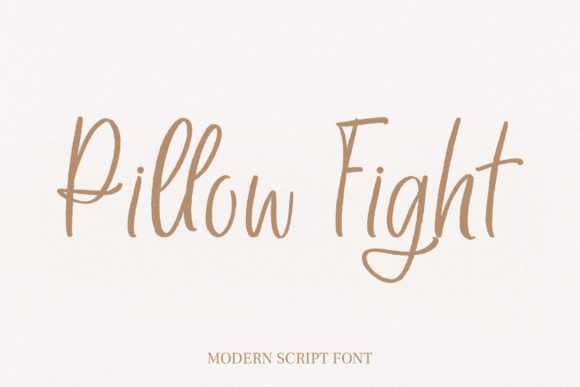
From the first glance, Pillow Fight has a soft, flowing character that feels both elegant and approachable. Its curves are gentle, its strokes vary in thickness, and it carries a sense of movement that makes it ideal for branding with a personal touch. It’s not too formal, not too casual—it sits somewhere in between, making it versatile for a range of design applications.
I started by testing it on a logo draft. The font added a handcrafted feel that contrasted nicely with the clean lines of the café’s logo mark. It worked well as a headline, giving the brand a friendly yet professional look. I tried it on a menu mockup next, and the way it curved around the text made it feel more dynamic than other script fonts I’ve used before.
Using Pillow Fight in Branding
As I moved into the full brand system, Pillow Fight proved to be a reliable companion. It worked great as a display font for headlines, social media graphics, and packaging design. On a business card, it added a subtle personality without overwhelming the design. On a shop sign, it gave the café a welcoming vibe that matched the client’s vision.
One thing I noticed was how Pillow Fight handled different sizes. At larger sizes, it maintained its clarity and charm, but at smaller sizes, it became less readable. That’s why I recommend using it as a headline or accent font rather than for body text. It’s best suited for short-form text where its visual appeal can shine through.
For the café’s packaging, I paired Pillow Fight with a simple sans serif font. The contrast helped create a balanced hierarchy, letting the script font stand out while keeping the overall design clean and easy to read. This kind of font pairing is common in modern typography, and it works especially well when one font is expressive and the other is neutral.
Testing and Practical Tips
Before finalizing any design, I always test a font across different materials. With Pillow Fight, I printed out a few samples on paper, created a digital mockup, and even put it on a mock-up of a coffee cup. It looked great in all scenarios, but I made sure to check how it appeared on screens and in print to avoid any surprises later on.
Another practical tip is to explore the font’s styles and alternates. Pillow Fight likely includes different weights and variations, which can add depth to your design. I found that using a lighter weight for headings and a bolder version for logos gave the brand more visual interest without being too busy.
When working with clients, I also make sure to explain the font’s strengths and limitations. Pillow Fight isn’t a one-size-fits-all solution, but when used correctly, it can elevate a design in a meaningful way. It’s important to highlight how the font contributes to the brand’s personality and how it can be applied across different mediums.
Real-World Applications
Whether it’s a t-shirt design, a poster, or a sticker, Pillow Fight adds a unique flair that stands out. On a flyer for the café’s opening event, it brought a sense of excitement and creativity that aligned perfectly with the brand’s message. For social media posts, it worked well as a header, drawing attention without being distracting.
In editorial design, such as a magazine layout or a brochure, Pillow Fight could serve as a decorative element, adding a touch of personality to headlines or section titles. It’s also useful for website headers, where it can help create a more engaging user experience.
For merchandise like mugs or tote bags, Pillow Fight’s fluidity made it feel more personal and handmade, which fits well with the café’s aesthetic. It’s a font that encourages storytelling, making it a valuable asset in any creative project.
Overall, Pillow Fight is a font that brings a sense of warmth and creativity to any design. As a graphic designer, I appreciate how it balances elegance with approachability, making it a go-to choice for projects that need a touch of personality. Whether you’re working on a small business brand or a larger creative campaign, Pillow Fight offers a fresh and modern alternative to more traditional script fonts.
If you’re looking for a font that can add character to your designs, Pillow Fight is definitely worth considering. It’s a versatile tool that can enhance your work in countless ways, from logos to packaging, and everything in between.